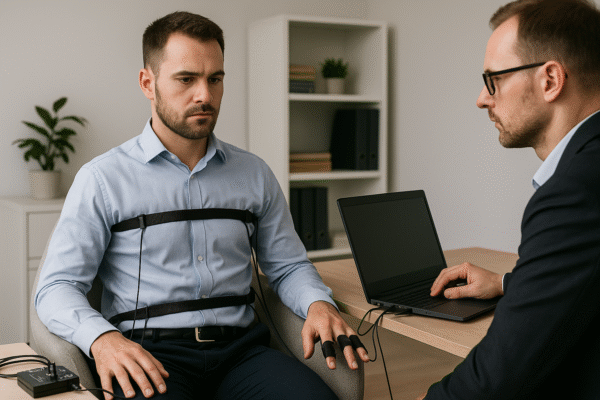
What a polygraph is and how it works
A polygraph test is a scientific tool that measures a person’s physiological reactions in response to questions. Despite the common myths, it is not a “truth machine” but an analyser of reactions that helps the specialist identify signs of stress, tension or attempts to conceal information.
What is a polygraph?
A polygraph records:
- heart rate
- breathing
- galvanic skin response
- blood pressure
- micro-movements
Taken together, this data gives experts an understanding of how confident and sincere a person is in their answers.
Need a test rather than theory? Take the VerifEye online test — from 2,500 UAH (≈ €50), no office visit — or calculate the cost of a polygraph test.
Lie detector: what it measures
A lie detector test is a set of questions that the person answers with “yes” or “no”. Importantly, the device itself doesn’t “decide” anything — only an experienced specialist draws the conclusion, by analysing the reactions.
How the polygraph procedure works
The procedure includes:
- A preliminary interview
- Explaining the rules
- Putting together the test questions
- The main test
- Analysis of the reactions
Polygraph test: what it is and what it is for
Lie detection is used in many areas: personnel security, internal investigations, trustworthiness assessments and pre-employment checks.
Where people take polygraph tests
The polygraph is most often used:
- by companies when hiring staff
- by the Ministry of Internal Affairs and other security and law enforcement agencies
- by private polygraph examiners
- by detective agencies
Polygraph at work: why it’s needed
A polygraph helps to:
- identify risks
- protect the company
- resolve disputes
- assess how reliable information is
How to take a polygraph test properly: rules and tips
One of the most common questions is: how do I get through a polygraph test without any problems?
How to prepare for a polygraph test
It’s important to:
- get a good night’s sleep
- avoid alcohol and stimulants
- arrive in a calm state
- answer honestly
- not be afraid of the device
How to calm down before a polygraph test
- a few deep breaths
- a positive frame of mind
- the understanding that EVERYONE gets nervous
How to behave during a polygraph test
- sit still
- speak briefly and clearly
- avoid unnecessary movements
- don’t try to “look calm”
How to answer on a polygraph test
- short answers: “yes”, “no” or “I don’t know”
- don’t explain unless necessary
- speak in an even voice
How a pre-employment polygraph test works
The procedure usually takes 1.5–3 hours and includes questions about:
- trustworthiness
- honesty
- compliance with rules
- previous experience
Taking a lie detector test: how the testing works
How to pass a lie detector test
The main advice is not to try to hide anything. What the polygraph records is precisely the reactions to an attempt at concealment.
Can you pass a lie detector test if you’re nervous?
Yes. Everyone gets nervous, and specialists take that into account.
How to take a lie detector test the right way
- be honest
- don’t make up answers in advance
- listen to the instructions
Myths about “beating” the polygraph
Why beating the polygraph is practically impossible
Attempts to alter breathing, pulse or muscle tension have long been known to specialists and usually show up on the charts.
What experts say about attempts to deceive
- a person trying to deceive produces more chaotic reactions
- the polygraph examiner sees artificial spikes
- the result may be worse than with honest answers
Need a test?
We’ll suggest which technology suits you best. We agree the questions in advance, and you get the result the same day. Confidential.
 Andriy Maryniak, polygraph examiner since 2012 · 6,000+ tests
Testing is done only with the voluntary written consent of the person being tested. Not sure which questions to ask? Ready-made test plans — from 590 UAH (≈ €12), credited towards the test.
FAQ — answers to the most common questions
1. How long does a polygraph test take?
On average, from 1.5 to 3 hours, including the pre-test interview.
The length depends on:
- the number of questions
- the purpose of the test
- the preliminary interview
- individual characteristics
The polygraph examiner always tells you the approximate time in advance.
2. Reviews of taking a polygraph test: what people say
The feedback is mostly:
- Neutral: most say everything went calmly.
- Positive: many people feel relieved after the test, since it confirms their honesty.
Fears usually turn out to be exaggerated.
3. What is a pre-employment lie detector test?
It is a standard procedure for checking:
- trustworthiness
- honesty
- the absence of hidden risks
- whether the information in the CV is accurate
It is often taken by candidates for jobs at banks, IT companies, security firms, logistics companies and government agencies.
4. Can you pass a polygraph test if you’re very nervous?
Yes.
Polygraph examiners assess not the nervousness itself but the difference in reactions to different types of questions.
So nerves are not an obstacle.
5. How to behave during a polygraph test at the Ministry of Internal Affairs
If you have been invited for a test:
- arrive on time
- answer calmly and clearly
- don’t explain more than necessary
- listen to the instructor
The specialist will tell you how to sit, breathe and answer correctly.
6. How to answer correctly on a polygraph test
The main rule is keep it short and to the point:
- don’t justify yourself
- don’t tell stories
- use only “yes” or “no”
- don’t try to guess the “right answer”
Your calm and confidence will increase the accuracy of the test.
The polygraph procedure: stages
Preliminary interview
The polygraph examiner:
- clarifies the details
- explains the procedure
- asks comparison questions
- prepares the test blocks
This helps reduce anxiety.
Main testing
At this stage:
- sensors are attached
- groups of questions are asked
- reactions are recorded
- several series of tests are run
The series include neutral, comparison and relevant questions.
Analysis of the results
The specialist:
- compares the reactions
- analyses the charts
- draws up the conclusion
The conclusion is drawn by a professional, not by the device.
How to get through a polygraph test without problems: recommendations
How not to worry
- breathe evenly
- don’t think about the result
- keep your emotions neutral
- trust the procedure
How to behave during a lie detector test
- don’t move unnecessarily
- answer straight away
- don’t try to “calm down” artificially
- listen to the polygraph examiner
Polygraph examination: what you should know
Polygraph accuracy
Polygraph testing has an accuracy of 85–89% (American Polygraph Association meta-analysis, 2011) when the test is conducted by an experienced polygraph examiner.
A polygraph does not determine the truth — it records reactions associated with inner tension.
The order of a polygraph test
It always includes:
- an interview
- a briefing
- testing
- analysis
Transparency of the procedure is mandatory.
What to remember before the test
How to prepare mentally
- set your mind on being honest
- be open
- don’t think about the “right” reactions
How to answer correctly
Short, simple answers reduce stress.
Don’t use complicated wording and don’t dodge the point.
Conclusion
A polygraph test is a professional and effective tool for assessing the reliability of information. It helps companies, government bodies and private individuals make well-founded decisions.
The main rules for getting through it successfully:
- stay calm
- answer honestly
- don’t be afraid of natural reactions
- trust the specialist
The right approach turns the test into a simple formality that confirms your honesty.
For more information on how the polygraph works, see the materials of the American Polygraph Association:
https://www.polygraph.org
To take a polygraph test, check the current prices and book a convenient time — we work every day.
If you are just getting to grips with the subject, start with the basics: the lie detector — what it is, how it works and how accurate it is.
Finding out for sure is quicker than you think
A polygraph test in Lviv costs from 3,000 UAH (≈ €59); the VerifEye online test, with no visit, from 2,500 UAH (≈ €50). We agree the questions before the test, and you get the conclusion on the day of testing. In another city? We will help you choose a method or recommend a fellow polygraph examiner.
Or take the VerifEye online test — no office visit, from 2,500 UAH (≈ €50)
Special offer Close
Request a free consultation in 30 seconds!
